

Defense Fighter
Mastering a skill at extremely high and demanding performance requires a level of all rounded conditioning.
Martial Artist
Military/ Soldier
Signing up for service, need workout that maintains or takes your physical challenges to another level to get the job or task at hand done. We have designed drills and training that puts those tests to the limits.
Authority Agents
Law Enforcement, Agency Enforcement or conditioning that requires unpredictable stressful performances, everything associated to your service to a specific department researched and developed with us.
Contact Sports: Non Combative
Sports such as American Football, Rugby or Ice Hockey
Models and Concepts Of Physical Combat
Review and understand the brief yet explanatory concepts and foundations of combative engagement in both sports and activities to improve and apply the movement to the best of what we know.
This feature has been disabled by the administrator
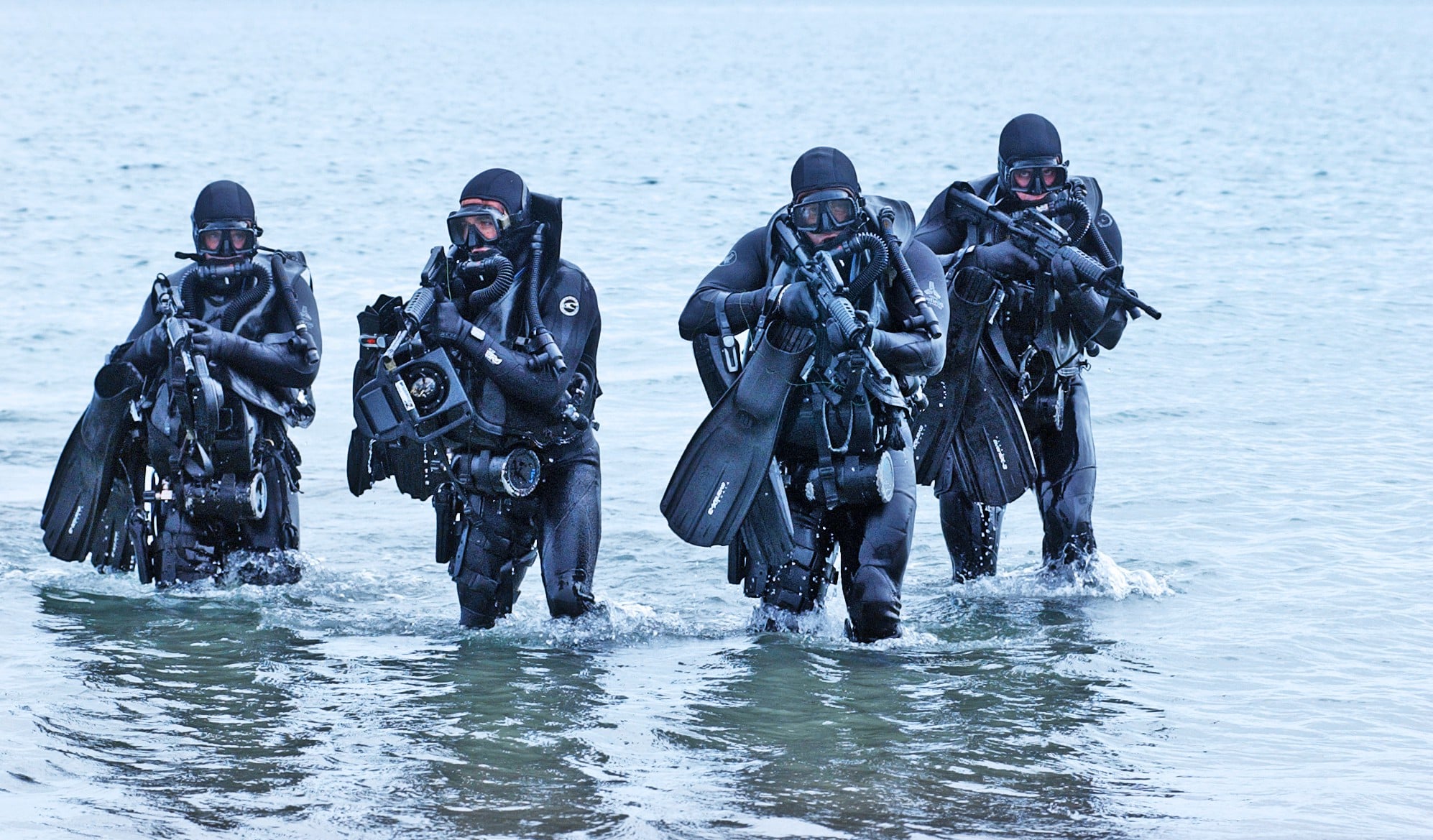
The Navy SEAL fitness screening test and physical fitness requirements are designed to ensure candidates meet the high standards needed for the demanding SEAL training program. Here’s an overview of the fitness screening test, physical requirements, and what the rest of the training and conditioning program looks like:
Stages of Skill Qualifications
-
Entry-Level Fitness:
- Initial assessment through the fitness screening test.
- Pre-BUD/S conditioning to prepare candidates for the demands of training.
-
BUD/S Completion:
- Demonstration of physical endurance and tactical skills.
- Successful completion of Hell Week and other rigorous training exercises.
-
SQT Completion:
- Advanced tactical skills and operational effectiveness.
- Final qualification and designation as a SEAL.
-
Specialized Skills:
- Further specialization based on individual SEAL roles and missions.
- Continuous training to stay current with advanced techniques and technologies.
Physical Fitness Requirements
To qualify for SEAL training, candidates must exceed the minimum scores for each event during the screening test. In addition to these physical requirements, SEAL candidates are expected to possess:
- High Levels of Endurance: For activities like long-distance running, swimming, and calisthenics.
- Strength: For tasks such as carrying heavy loads and performing challenging physical maneuvers.
- Flexibility and Agility: Important for both swimming and physical exercises.
Navy SEAL Fitness Screening Test
During this point of screening test the assessment and ability of each individual ranges depending on their capacity and ability to adapt quickly throughout the pre entry training program, results of such screening and be measured in rating how the individual is capable based on Minimum, Average and Optimum
-
Swim:
- Event: 500-yard swim.
- Requirement: Complete in under 10 minutes and 30 seconds.
- Style: Freestyle with or without fins.
-
Push-Ups:
- Event: Maximum number of push-ups in 2 minutes.
- Requirement: Minimum of 50 push-ups.
-
Sit-Ups:
- Event: Maximum number of sit-ups in 2 minutes.
- Requirement: Minimum of 50 sit-ups.
-
Pull-Ups:
- Event: Maximum number of pull-ups.
- Requirement: Minimum of 10 pull-ups (no time limit).
-
Running:
- Event: 1.5-mile run.
- Requirement: Complete in under 9 minutes and 30 seconds.
Training and Conditioning Program
The purpose of such tests and requirement levels are to prepare the individual to meet the necessary standards to advance onto the most intense program and conditioning of training which are as shown
-
Pre-BUD/S (Basic Underwater Demolition/SEAL) Preparation:
- Focus: Physical conditioning, swimming proficiency, and overall endurance.
- Activities: High-intensity workouts including running, swimming, calisthenics, and strength training.
-
BUD/S Training:
- Duration: Approximately 24 weeks.
- Phases:
- First Phase: Basic conditioning and physical fitness. Emphasis on physical training, with a focus on overcoming physical and mental challenges such as “Hell Week,” a grueling 5.5-day period of continuous physical activity and sleep deprivation.
- Second Phase: Diving. Includes underwater operations, combat swimming, and learning to operate with diving equipment. Candidates also work on underwater navigation and survival skills.
- Third Phase: Land Warfare. Focuses on small unit tactics, weapons training, and demolition. Emphasizes practical field training exercises and mission planning.
-
SEAL Qualification Training (SQT):
- Duration: About 26 weeks.
- Focus: Advanced tactical training, including live-fire exercises, advanced combat techniques, and mission planning.
- Completion: Candidates must demonstrate their skills and complete a series of complex scenarios and exercises.
-
Specialized Training:
- Duration: Varies based on specialty.
- Focus: Further training in specific areas such as sniper operations, breaching techniques, and advanced underwater skills.
-
Ongoing Training and Conditioning:
- After Qualification: SEALs continue to engage in rigorous physical training to maintain their fitness and skills. They regularly participate in advanced training exercises and maintain proficiency in various SEAL-specific skills.
Becoming a Navy SEAL requires not only meeting initial physical standards but also excelling through a rigorous training process designed to develop physical endurance, mental toughness, and specialized operational skills.
