

Introduction to Physical Conditioning
Components of Physical Fitness
Principles of Physical Conditioning
Types of Physical Conditioning
Sports Conditioning
Create Physical force through Functional Strength, Power and Explosiveness all through efficiently developed conditioning
Designing a Conditioning Program
Specifically designed conditioning Programs for Athletes or Individuals based on factors of lifestyle, social and financial capacities.
Nutrition and Physical Conditioning
How both Nutrition and Physical Conditioning integrate and respond to each other, contributing significantly to performance and overall health and wellbeing.
Nutrition for Athletes
Specific Nutritional Requirements and Needs for Athletes performing at Off Season or Demanding Competitive Levels, from beginner to elite.
Injury Prevention and Management
Psychological Aspects of Physical Conditioning
Case Studies and Practical Applications
Analysis With Regards to The Latest Health Related Data and Results
Conclusion and Future Trends
General Planes Of Movement
learn the various directions and planes of dynamic movement to understand motion and its functions applied in the real world.
The Body’s Foundation: The Skeletal System
usually neglected in most training routines and mistakenly accounted for general training and conditioning Routines that still risk injuries.
Technological Aspects Of Physical Training & Conditioning
we take a look at the technological devices on both personal and demographic level when it comes integrating and implementing tools for better performance and daily health improvements. Is it worth the while and Effectiveness?
Mathematical Models & Training Implementation
Peak into the surface levels of the models and numerical information regarding movement and the real science behind the mechanisms and process that bring about amazing and marvellous biomechanics and anatomical advantages to create movement. You don't have to be a mathematician nor love the subject, simply dig in and we will explain the rest the simplest way that will stir up intrigue and fascination.
This feature has been disabled by the administrator
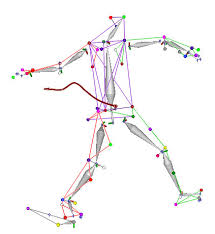
Human movement is inherently unique to each individual, shaped by a blend of physical, neurological, biomechanical, and behavioral factors. This uniqueness manifests in what can be called a biomechanical and kinematic signature—a complex, measurable “fingerprint” of how a person moves through space. Using general or workout or even training that is one fits all is proven useless when we consider and encounter this way of assessing and understanding the individuals health issues and risks or even trying to improve health and fitness objective to bettering athletic performance.
Biomechanical and Kinematic Signature: What It Is
A person’s biomechanical and kinematic signature is defined by:
-
Joint angles during movement
-
Range of motion and flexibility
-
Force production and torque at different joints
-
Gait patterns, posture, and balance
-
Velocity and acceleration of limbs and segments
-
Timing and coordination of muscle activation (neuromuscular control)
These elements together create a distinct pattern that can be observed and quantified using motion capture systems, force plates, electromyography (EMG), and wearable sensors.
Why Movement Is Unique to Each Person
Movement patterns differ from person to person due to:
-
Anatomical structure – Limb lengths, joint alignments, muscle attachments, and proportions affect how forces are generated and absorbed.
-
Neuromuscular control – The brain’s control over timing, sequencing, and force regulation is unique to each individual.
-
Motor learning and experience – Athletes, dancers, or individuals with injuries move differently due to specific adaptations or compensations.
-
Lifestyle and habits – Repetitive daily movement patterns (e.g., how you walk, sit, or lift) shape your movement “style.”
-
Injury history or pathologies – Prior injuries can lead to compensations or restrictions that alter normal movement.
Movement Reveals Strengths and Weaknesses
Because your movement signature is a reflection of your entire musculoskeletal and neurological system, it acts like a window into your strengths, weaknesses, and overall capabilities:
-
Efficiency and economy – A smooth, well-coordinated movement often signals efficient energy use and good motor control.
-
Asymmetries and compensations – If one side of the body works harder or moves differently, it could highlight imbalances or past injuries.
-
Mobility limitations – Restricted range of motion in joints (e.g., tight hips or ankles) becomes apparent through altered gait or movement mechanics.
-
Power and force production – How explosively or forcefully someone moves (e.g., during jumps, sprints) shows their neuromuscular strength.
-
Stability and control – Wobbling, overcorrection, or delayed responses can show deficits in balance, proprioception, or motor control.
-
Adaptability – How someone adjusts to different surfaces, loads, or directions reveals their ability to handle dynamic movement demands.
In Practice
This is why fields like sports science, physical therapy, and biomechanics use motion analysis to evaluate:
-
Athletic performance
-
Injury risk
-
Rehabilitation progress
-
Skill development
For example, a runner with excessive inward knee collapse (knee valgus) during stride may have hip weakness or poor neuromuscular control, increasing their risk for ACL injury. Meanwhile, a basketball player who demonstrates explosive vertical jumps with minimal ground contact time likely has superior power output and coordination.
Conclusion
Your movement is your signature. It carries the imprint of your body’s structure, your experiences, and your abilities. By analyzing this signature, experts can decode what makes you move the way you do—what you’re great at, and where there’s room to grow or improve, from breathing patterns to basic movements and the way they are achieved to even the way one sits are all clear definitive indicators of this biomechanical and kinematic signature.
